Daylight and Your Body Clock: Lighting a Home for Better Days and Nights
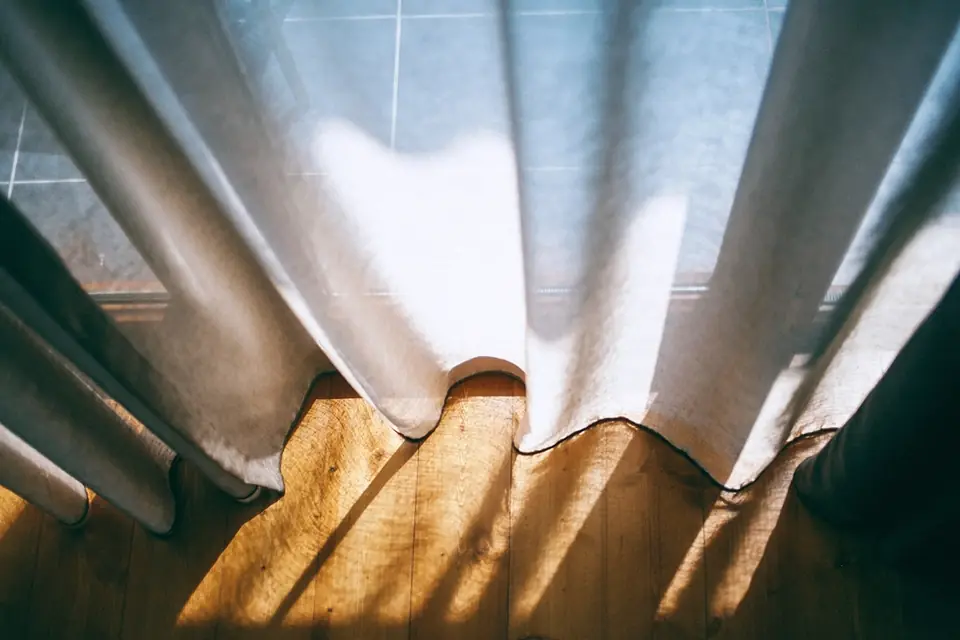
Your body clock runs on light. Most homes give it too little light during the day and too much in the evening. A few changes to how you use windows, lamps and screens can bring the pattern closer to what the clock expects.
How light sets the clock
The human circadian system is coordinated by a small region of the brain, the suprachiasmatic nucleus, which keeps a rhythm of roughly 24 hours. Left alone, that rhythm drifts slightly; light is the main signal that keeps it aligned with the day. Light reaches the clock through special cells in the retina (intrinsically photosensitive retinal ganglion cells) that contain a pigment called melanopsin. These cells respond most strongly to short-wavelength, blue-cyan light, around 480 nanometres.
The timing of light matters:
- Light in the morning tends to shift the clock earlier, making it easier to feel sleepy at a reasonable hour.
- Light in the late evening and at night tends to shift it later and suppresses melatonin, the hormone released in darkness that signals biological night.
Homes are dim; daylight is not
Light intensity is measured in lux. Typical indoor lighting provides a few hundred lux at most on a desk, and often far less at eye level in a living room. Outdoor daylight ranges from roughly 1,000 lux on a heavily overcast day to 100,000 lux in bright sun. Even a cloudy morning outdoors therefore delivers many times more light than a well-lit room. People who spend most of the day indoors may receive a weak daytime signal and then a relatively strong evening signal from lamps and screens.
What experts recommend
In 2022 an international group of circadian and sleep scientists published consensus recommendations for indoor light exposure in healthy adults (Brown et al., PLOS Biology). They used a measure called melanopic equivalent daylight illuminance (melanopic EDI), which weights light by its effect on melanopsin. Their recommendations were:
- During the day: at least 250 lux melanopic EDI at eye level, ideally as daylight.
- In the evening, starting at least three hours before bedtime: no more than 10 lux melanopic EDI.
- During sleep: the bedroom should be as dark as possible, no more than 1 lux melanopic EDI.
Ordinary light meters do not measure melanopic EDI, and these figures are not something to obsess over at home. They describe a pattern: bright days, dim evenings, dark nights.
| Situation | Light level | Source |
|---|---|---|
| Typical indoor lighting on a desk | A few hundred lux at most | Typical values |
| Outdoors, heavily overcast day | About 1,000 lux | Typical values |
| Outdoors, bright sun | Up to about 100,000 lux | Typical values |
| Recommended during the day (eye level) | At least 250 lux melanopic EDI | Brown et al., 2022 |
| Recommended in the evening (from 3 h before bed) | No more than 10 lux melanopic EDI | Brown et al., 2022 |
| Recommended in the bedroom during sleep | No more than 1 lux melanopic EDI | Brown et al., 2022 |
Melanopic EDI and ordinary lux are different measures; the rows are shown together to give a sense of scale, not to be compared directly.
Practical changes at home
During the day
- Open curtains and blinds fully in the morning, and spend time close to windows. Light falls off quickly with distance from a window.
- If you work from home, place your desk near a window, with the window to the side of the screen to limit glare (see a home office kind to your back).
- Go outside in the morning when you can, even briefly and even when it is cloudy; a walk combines daylight with physical activity.
- Keep windows clean and avoid blocking them with furniture.
In the evening
- Switch from bright overhead lights to lower lamps placed below eye level.
- Choose warmer (lower colour temperature) bulbs for evening rooms; they contain relatively less blue light.
- Dim screens and keep them further from your eyes. In a laboratory study, reading on a light-emitting e-reader before bed delayed melatonin release and next-morning alertness compared with reading a printed book (Chang et al., PNAS 2015). "Night mode" settings reduce blue light but the evidence for a meaningful sleep benefit is limited; overall brightness and what you are doing on the device likely matter more.
At night
- Use blackout curtains or blinds if street lighting or early summer dawns disturb sleep, or an eye mask.
- Cover or remove bright standby lights in the bedroom.
- For night-time trips to the bathroom, low, warm night lights are safer than turning on bright lights, especially for older people at risk of falls.
Winter and seasonal low mood
At high latitudes, short winter days reduce daylight exposure considerably. Some people experience seasonal affective disorder (SAD), a type of depression with a seasonal pattern. Bright light therapy, using a light box under guidance, is one of the treatments studied for SAD. Anyone with persistent low mood should speak to a doctor rather than self-treating; light boxes are not suitable for everyone, for example some people with eye conditions or bipolar disorder.
Shift work and jet lag
People working nights face a clock that is out of step with their schedule. Strategic light and darkness (bright light at the start of a night shift, dark glasses on the way home, a dark bedroom for daytime sleep) are used in occupational health programmes, but plans need to be individual. Jet lag follows the same principles: light at the right local time helps the clock shift.
In short
- Light is the main signal that sets the body clock; morning light shifts it earlier, evening light later.
- Indoor light is typically far dimmer than daylight, even on cloudy days.
- Expert consensus favours bright days, dim evenings and dark bedrooms.
- Simple changes (open curtains, sit near windows, lower evening lights, darken the bedroom) move a home in that direction.
This page is general information, not medical advice. Persistent sleep problems or low mood deserve a conversation with a doctor.
Sources
- Brown TM et al. Recommendations for daytime, evening, and nighttime indoor light exposure to best support physiology, sleep, and wakefulness in healthy adults. PLOS Biol 2022;20(3):e3001571.
- Chang AM et al. Evening use of light-emitting eReaders negatively affects sleep, circadian timing, and next-morning alertness. Proc Natl Acad Sci USA 2015;112(4):1232–1237.
- US National Institute of General Medical Sciences, Circadian rhythms fact sheet.
- NHS, Seasonal affective disorder (SAD).
 Sleep
How much sleep adults need
Not one magic number but a range: what sleep societies, the CDC and the NHS recommend.
 Routines
A science-based morning routine
Wake time, daylight, movement and caffeine, plus viral tips without evidence.
 Nutrition
Vitamin D
How much you need, who is short, and what large trials such as VITAL found.