Vitamin C: Daily Needs, Colds, and What High Doses Really Do
Most people in high-income countries get enough vitamin C from fruit and vegetables. The famous question, whether large doses prevent colds, has been tested in dozens of trials. The answer is mostly no, with one interesting exception.
What vitamin C does
Vitamin C (ascorbic acid) is needed to make collagen, the protein that holds together skin, blood vessels, tendons, gums and bones. It helps wounds heal, acts as an antioxidant in body fluids, and increases the absorption of non-haem iron, the form found in plant foods. Humans, unlike most animals, cannot make vitamin C and must get it from food.
Severe deficiency causes scurvy: fatigue, swollen and bleeding gums, easy bruising, poor wound healing, joint pain, corkscrew-shaped hairs and, if untreated, death. Scurvy can develop after about one to three months of very low intake. It is rare today but has not disappeared: it still occurs in people with very restricted diets, alcohol dependence, severe food insecurity or eating disorders, and among some older people living alone.
Reference intakes
| Body | Men | Women | Upper limit (adults) |
|---|---|---|---|
| US National Academies (NIH ODS) | RDA 90 mg | 75 mg (pregnancy 85, breastfeeding 120) | 2,000 mg |
| EFSA (EU, 2013) | PRI 110 mg | 95 mg | Not set |
| UK reference nutrient intake | 40 mg | 40 mg | NHS: 1,000 mg or less a day unlikely to cause harm |
The US adds 35 mg a day for people who smoke, because smoking increases oxidative stress and vitamin C turnover. EFSA did not set a tolerable upper intake level because the data did not allow one, but it noted that supplemental intakes of around 1 g a day in addition to diet were not associated with adverse effects. The UK figure is much lower than others because it was set to prevent scurvy with a margin, not to saturate body tissues.
Where it comes from
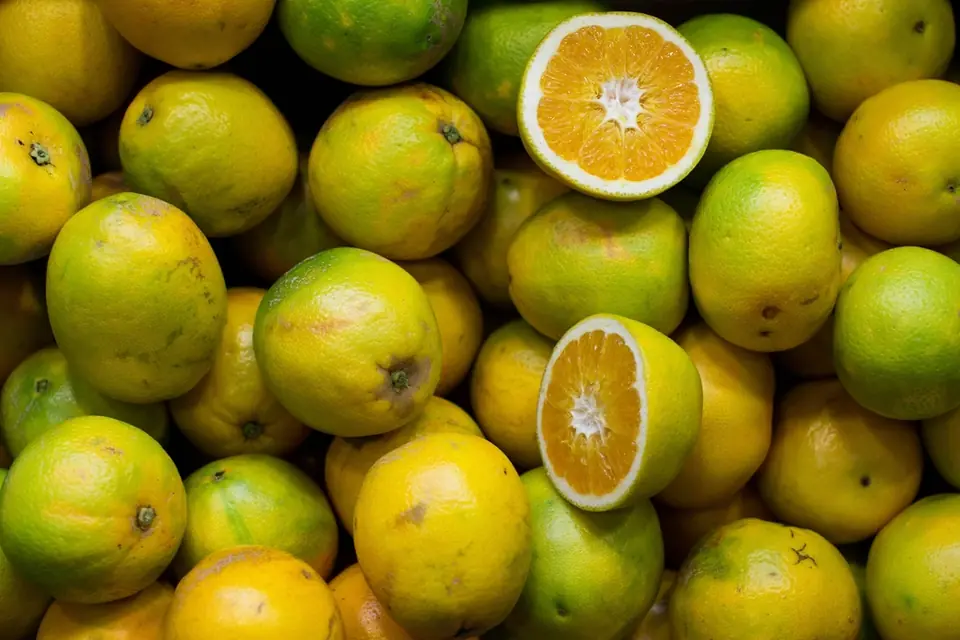
Good sources include peppers, citrus fruit, kiwi fruit, strawberries, blackcurrants, broccoli, Brussels sprouts, cabbage, tomatoes and potatoes. Vitamin C is destroyed by heat and leaches into cooking water, so steaming or eating some fruit and vegetables raw retains more. Five portions of fruit and vegetables a day typically supply well above the reference intakes.
Vitamin C and the common cold
The idea that large doses prevent colds was popularised in the 1970s. A Cochrane review by Hemilä and Chalker (2013) pooled the randomised, placebo-controlled trials that used at least 200 mg a day:
- Prevention in the general population: taking vitamin C regularly did not reduce how often people caught colds (29 trial comparisons, over 11,000 participants; risk ratio 0.97).
- Duration: regular supplementation slightly shortened colds, by about 8% in adults and 14% in children. For a typical week-long cold, that is roughly half a day for an adult.
- The exception: in people under heavy short-term physical stress, such as marathon runners, skiers and soldiers on sub-arctic exercises, regular vitamin C roughly halved the risk of catching a cold (risk ratio 0.48). This finding comes from a small number of trials.
- Starting after symptoms begin: taking vitamin C only once a cold has started did not consistently shorten it or reduce symptoms.
The practical conclusion drawn by the reviewers is modest: routine supplementation is not justified for the general population to prevent colds, and trials of taking it at the first symptom have been inconsistent.
Other claims
Vitamin C has been studied for cancer, cardiovascular disease, cataracts and, during the COVID-19 pandemic, for respiratory infection. Large trials of oral vitamin C in healthy people, such as the Physicians' Health Study II, did not find that it lowered the risk of cancer or major cardiovascular events. High-dose intravenous vitamin C used in some clinical research is a different intervention given by doctors, and results from those studies cannot be applied to oral supplements.
Too much vitamin C
The body absorbs vitamin C less efficiently as the dose rises, and excess is excreted in urine. Even so, high doses have effects:
- Digestive upset. The US upper limit of 2,000 mg a day was set to avoid diarrhoea and other gastrointestinal symptoms caused by unabsorbed vitamin C. The NHS notes that more than 1,000 mg a day can cause stomach pain, diarrhoea and flatulence, which go away once supplements are stopped.
- Kidney stones. Vitamin C is partly converted to oxalate. In a Swedish cohort of men, those taking vitamin C supplements had about twice the risk of kidney stones over 11 years compared with non-users (Thomas et al., JAMA Internal Medicine 2013). This was an observational study, but people with a history of kidney stones are generally advised to avoid high-dose vitamin C.
- Iron overload. Because vitamin C increases iron absorption, high doses may be a concern for people with haemochromatosis.
- Lab tests. High doses can interfere with some laboratory tests, including certain blood glucose measurements.
Who may need more attention
People who smoke, people with a very limited diet, people with conditions that impair absorption, and people on dialysis can have low vitamin C levels. Improving the diet is the first step; any supplement for a medical reason is best discussed with a clinician.
In short
- Adult reference intakes range from 40 mg (UK) to 75–90 mg (US) and 95–110 mg (EFSA) a day, easily met by fruit and vegetables.
- Regular vitamin C does not prevent colds in most people; it shortens them slightly.
- People under extreme physical stress may be an exception.
- The US upper limit is 2,000 mg a day; high doses can cause digestive upset and may increase kidney stone risk.
This page is general information, not medical advice. Ask a doctor or pharmacist before taking vitamin C supplements if you have kidney disease, a history of kidney stones or haemochromatosis.
Sources
- NIH Office of Dietary Supplements, Vitamin C fact sheet for health professionals.
- NHS, Vitamin C.
- Hemilä H, Chalker E. Vitamin C for preventing and treating the common cold. Cochrane Database Syst Rev 2013.
- EFSA, Dietary reference values finder.
- Thomas LDK et al. Ascorbic acid supplements and kidney stone incidence among men: a prospective study. JAMA Intern Med 2013;173(5):386–388.
 Nutrition
Do multivitamins work?
What Physicians' Health Study II, COSMOS and the USPSTF found for cancer, heart disease and memory.
 Nutrition
Iron and anaemia
Needs, absorption, anaemia and why iron supplements need care.
 Nutrition
Reading reference intakes and labels
RDAs, reference intakes and label percentages, explained so you can compare.